Custom optics meet wildlife care in a world-first surgical feat.
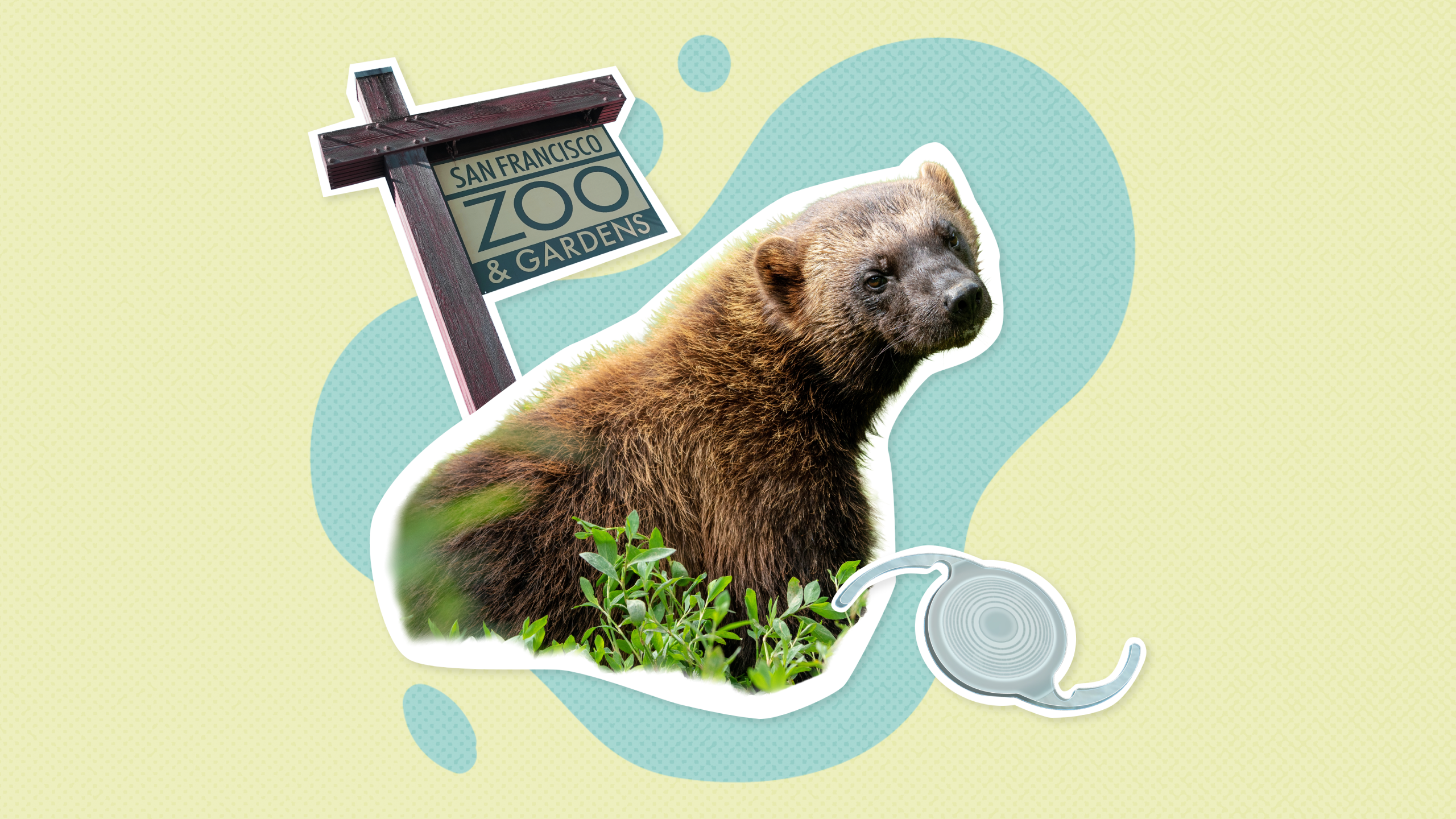
A two year old wolverine named Edward at the San Francisco Zoo (California, USA) has become the first in his species to receive a custom-made intraocular lens (IOL) during cataract surgery.
The breakthrough began when Edward’s caretaker noticed cataracts forming in both eyes and sought veterinary care. Since no IOL exists for wolverines (gee, wonder why?), restoring his vision meant venturing into new territory.
The discovery
In May 2025, Edward’s team noticed his right eye turning cloudy. “We were surprised to see what appeared to be a cataract forming in the eye of such a young animal,” said Dr. Nick Dannemiller, the zoo’s clinical veterinarian, in a news release. The finding prompted a consultation with Dr. Kate Freeman, a veterinary ophthalmologist with extensive experience.
After evaluating Edward, Dr. Freeman diagnosed a mature cataract in his right eye and a smaller one forming in the left. She performed the first cataract surgery in August. But with no artificial lenses designed for wolverines, Edward was left aphakic and significantly farsighted.
READ MORE: The Profound Depths of Animal Perception–What it Means in Vision Research
Engineering a custom lens
“In humans, and even in cats and dogs, there are manufactured replacement lenses made specifically for those species,” said Dr. Freeman. “At the time of Edward’s first surgery, there were no artificial lenses made for a wolverine.”
Knowing that Edward would eventually need surgery on the second eye, Dr. Freeman turned to her longtime mentor, Dr. Christopher Murphy of the University of California, Davis, who then brought in optometrist Dr. Donald Mutti from Ohio State University.
Dr. Mutti embraced both the challenge and the novelty of the case. “I wasn’t about to pass on a wolverine case,” he said. “Everyone deserves good vision.”
He explained the severity of Edward’s refractive error. “The amount of farsightedness in Edward’s eye without an implant would be extremely high,” Dr. Mutti said. “My guess is that Edward was at about a level of 50 diopters, where he’d be able to see whether lights were on or off and maybe some gross motion, but there would be no capability for detail vision in Edward’s eye.”
READ MORE: Femtosecond Laser Breakthroughs Steal the Show at ESCRS 2025
Using high-resolution ultrasound and keratometry loaned from Micro Medical Devices (California, USA), Dr. Freeman and colleague Dr. Maggie LiPuma calculated Edward’s eye curvature, lens position and axial length. After multiple rounds of design with lens manufacturer an-vision (Utah, USA), they finalized a 100-diopter custom lens—nearly double the strength typically used in cats.
“Based on the measurements we calculated, a dog or cat lens would not work well for a wolverine, so we elected to have a special one made for him,” said Dr. Freeman.
The surgery
In November, Dr. Freeman performed Edward’s second cataract surgery and implanted the custom lens in his left eye. She left the right eye without a lens. “Every time you open up an eye, you introduce potential problems,” she explained. “Since we knew Edward was doing well with only one eye farsighted, it was best to leave the right eye aphakic.”
After successful completion of the procedure, Edward became the first wolverine to receive an intraocular implant.
READ MORE: Intraocular Lens Replacement in a World of Blue Light
The results
Edward’s handlers quickly noticed changes. “After the surgery, we believe he can see a bit better, albeit aphakic, because he was more willing to present his right side during training activities,” said Dr. Dannemiller. “And now after the second surgery, we notice improvements in his overall vision.” With better sight came a bit of swagger: he even out-hunted his exhibit mate Molly when a stray rodent wandered into the enclosure.
His care team continues administering two to three eye drops daily, aided by his cooperative training. They remain optimistic as they monitor his recovery.
READ MORE: What’s Up, Doc? Investigating the Effects of Ectasia after LASIK and SMILE
The takeaway
Developing and implanting a 100-diopter custom IOL for a threatened species demonstrates how collaboration between veterinary and human eye specialists can expand the frontiers of comparative ophthalmology.
Innovations like this not only improve animal welfare but deepen our understanding of ocular diversity across species. Edward’s case is a reminder that meaningful advances in ophthalmic science can emerge from unexpected places—and occasionally, from a very farsighted wolverine.
Editor’s Note: This content is intended exclusively for healthcare professionals. It is not intended for the general public. Products or therapies discussed may not be registered or approved in all jurisdictions, including Singapore.