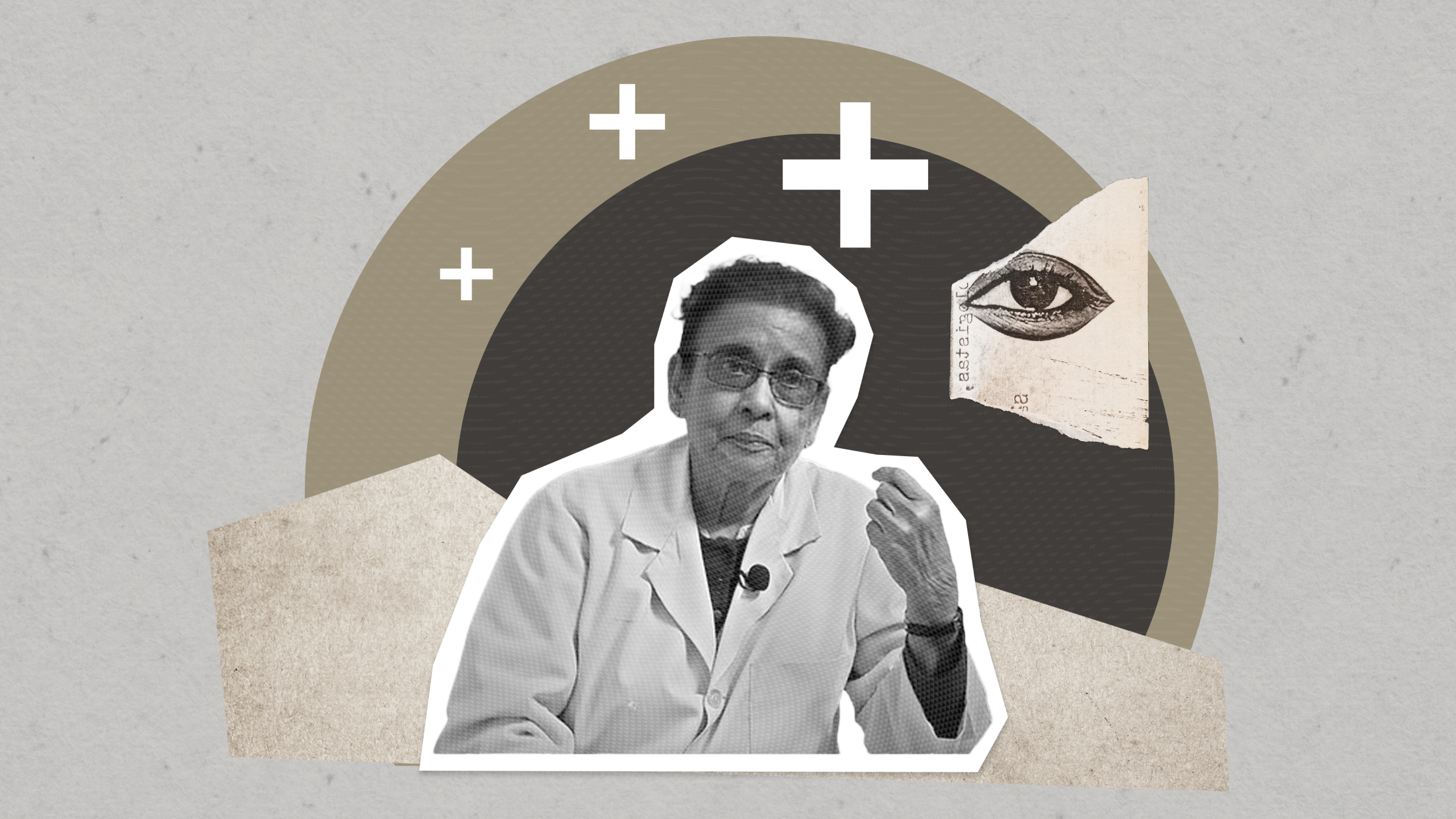
Pakistan’s first female ophthalmologist transformed eye care through decades of skill, access and service to underserved communities
For nearly seven decades, Dr. Pramila Lall’s professional life was defined less by headlines than by habit: steady service, surgical skill and long-term impact. Widely recognized as Pakistan’s first female ophthalmologist, she passed away on January 3, 2026 at the age of 93.
Dr. Lall served for more than 50 years at the Taxila Christian Hospital in Punjab, where she became known for delivering high-quality, low-cost eye care to patients from economically marginalized communities. Over the course of her career, she is believed to have performed more than half a million of eye surgeries, an extraordinary volume that places her among the most prolific female ophthalmic surgeons in Asia. Yet colleagues and patients alike remembered her less for the numbers than for her consistency: showing up every day, operating steadily and putting patient needs above all else.*
Building an ophthalmology career from the ground up
Born in 1932 in Kerala, India, Dr. Lall trained at Christian Medical College in Vellore, one of South Asia’s most respected medical institutions, graduating in 1957. That same year, she moved to Pakistan, a country still navigating the aftermath of Partition and the early stages of building its healthcare infrastructure. Rather than pursuing a more lucrative or internationally visible path, she joined Taxila Christian Hospital, a decision that would come to define the rest of her professional life.*
READ MORE: Breaking Barriers: 10 Women Who Are Shaping Ophthalmology
In 1964, Dr. Lall earned a diploma in ophthalmology from London, formally becoming Pakistan’s first woman specialist in the field. At the time, ophthalmology itself was still emerging as a structured specialty in the country, and female surgeons were exceedingly rare. Her presence alone challenged entrenched norms, but her sustained clinical output that ensured her role could not be dismissed as symbolic.*
She continued to build her professional credentials over the decades, receiving a fellowship at the Royal College of Ophthalmologists in 1980 and later recognition from the American Academy of Ophthalmology. Despite these international links, she remained firmly rooted in clinical service at Taxila, prioritizing surgical volume, affordability and continuity of care over private practice or relocation abroad.*
READ MORE: Doctor of Many Hats (Women in Ophthalmology)
Advancing surgical care and training future generation of specialists
Dr. Lall’s contributions extended well beyond access. In 1976, she became the first woman to perform intraocular lens implant surgery in Pakistan, marking a major advancement in cataract treatment at a time when many patients still relied on older techniques. This milestone helped modernize local ophthalmic care and align practices at Taxila with evolving global standards.*
Equally significant was her role as an educator and mentor. Over the years, Dr. Lall trained generations of ophthalmologists in Pakistan and internationally, passing surgical skills, clinical judgment and a patient-first philosophy that stressed outcomes over speed or recognition. As the head of the ophthalmology department at Taxila Christian Hospital, she played a central role in postgraduate medical training, helping ensure that expertise remained within the public and mission-driven healthcare sector.*
READ MORE: Double-Layered Amniotic Membrane Disc Shows Positive Visual Gains, Study Reports
Dr. Lall was also a founding member of the Rawalpindi chapter of the Ophthalmological Society of Pakistan and served on the National Steering Committee for the Prevention of Blindness. Through these roles, she influenced eye care policy and training standards at a national level while maintaining an exceptionally demanding clinical workload.*
Perseverance amid pressure and uncertainty
Dr. Lall’s career unfolded against a backdrop of political tension, war and social change. During periods of conflict between India and Pakistan, she faced scrutiny because of her origins, and at times the pressure—combined with overwhelming patient demand—led her to consider leaving the country altogether. Ultimately, she chose to stay, maintaining her surgical schedule and responsibilities at Taxila when stability was far from assured.*
READ MORE: Research Illuminates Gender and Racial Disparities in Ophthalmology Resident Surgical Volume
That decision had lasting consequences. By remaining, she ensured continuity of care for thousands of patients who relied on the hospital as their primary source of eye care. It also allowed her to build an ophthalmology service that did not rely on her alone, but on systems, training and institutional memory that would continue beyond her tenure.
The takeaway
Dr. Lall’s legacy is not defined solely by being first, but by being a constant. In a field increasingly shaped by technology, subspecialization and efficiency metrics, her life’s work is a reminder that sustained access, skilled hands and long-term commitment remain at the heart of effective eye care. Her impact lives on in the millions who regained their sight and in the generations of ophthalmologists she trained to carry that work forward.
*Source: Christian Daily